Clean Finishes for Industrial Environments
Solid Color Flooring System in North Branch for warehouses, manufacturing facilities, and commercial spaces requiring uniform monolithic surfaces
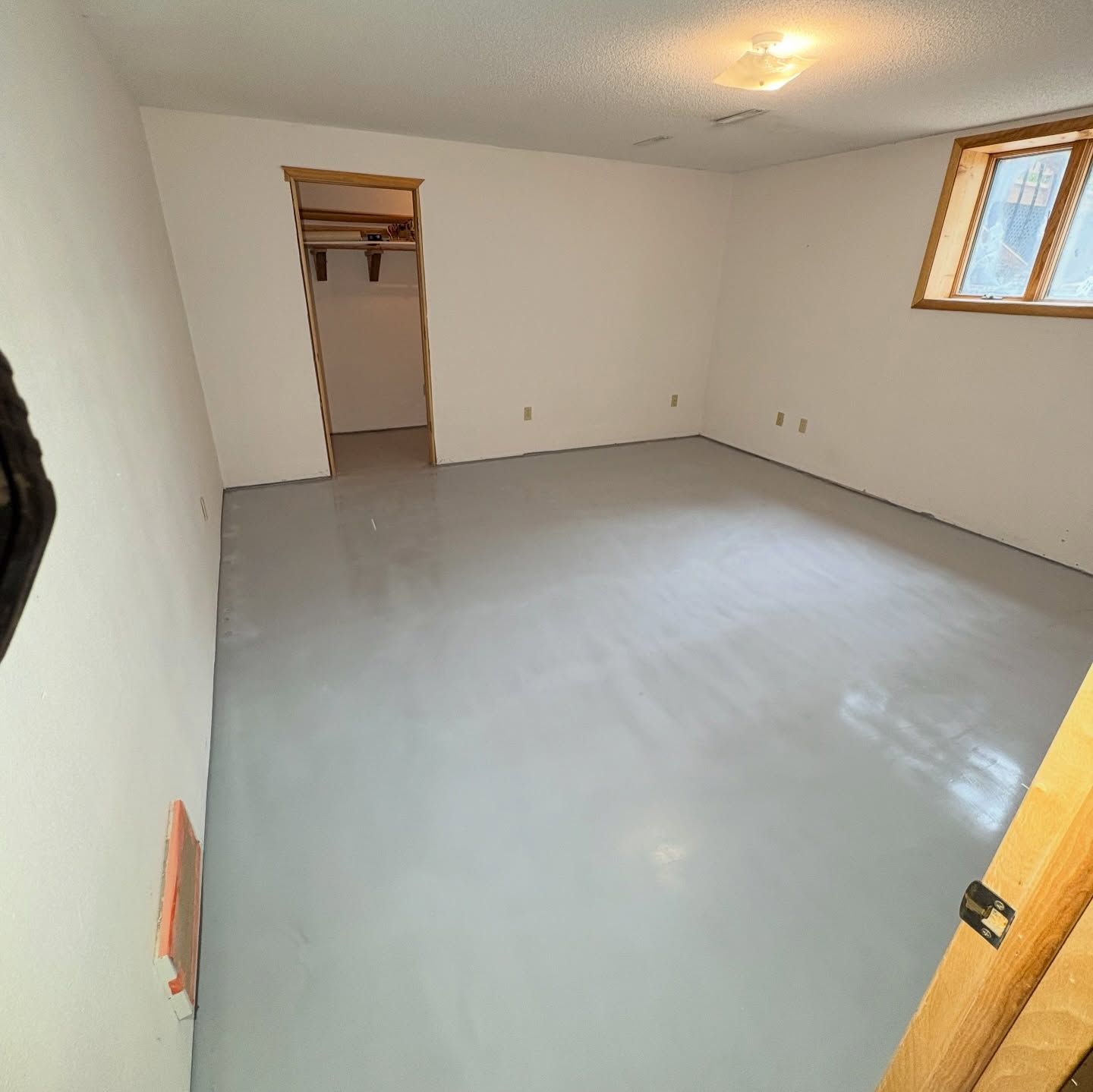
Industrial concrete floors in Minnesota warehouses and manufacturing facilities deteriorate rapidly without protection—surface dusting, oil stains, and spalling from freeze-thaw exposure create maintenance burdens and safety concerns. Solid-color epoxy flooring from Wild Coatings LLC. addresses these issues with a monolithic coating system applied across prepared concrete, creating a uniform surface that resists chemical exposure, moisture intrusion, and the abrasion generated by equipment traffic. This practical solution suits facilities where appearance takes secondary priority to durability, cleanability, and long-term cost control across operations in North Branch and the five-state service area.
The system involves single or dual-coat epoxy resin application over profiled concrete, building a sealed barrier between the substrate and the environment. Chemical resistance and slip resistance options can be incorporated based on the substances your facility handles and whether the floor remains dry or experiences wet conditions from cleaning or process operations. The result is a continuous surface without seams or joints where contaminants can accumulate, which simplifies cleaning protocols and reduces the labor required to maintain acceptable sanitation standards.
Arrange a facility walkthrough to identify traffic patterns, chemical exposure zones, and the performance specifications your coating system must meet.
What Solid Color Systems Actually Accomplish
Concrete profiling removes surface contaminants and opens the pore structure to accept epoxy penetration—diamond grinding creates the roughness profile measured in mils that determines bond strength. The epoxy coat fills these surface irregularities and creates a level plane, eliminating the dust generation that untreated concrete produces when forklifts and pallet jacks travel across it. In facilities handling food products or pharmaceuticals, this dust elimination directly affects compliance with sanitation requirements and reduces airborne particulates that contaminate production areas.
After the coating cures, spills no longer soak into the concrete and create permanent stains—liquids bead on the sealed surface where they can be wiped or mopped before they spread or penetrate. Oil drips from equipment, hydraulic fluid leaks, and chemical spills become cleaning tasks rather than permanent floor damage. The uniform color also improves lighting effectiveness by increasing light reflectance compared to dark, stained concrete, which can reduce supplemental lighting requirements in large warehouse spaces across northern Minnesota.
Color selection affects both appearance and practical maintenance—lighter colors show dirt and tire marks more readily but maximize light reflectance, while darker grays and tans hide traffic patterns and soil accumulation between cleaning cycles. Slip resistance is added through broadcast aggregates or textured rollers during application when wet conditions or inclined surfaces require additional traction beyond what smooth epoxy provides.
What Facility Operators Need Clarified
Solid-color systems prioritize function over decoration, and the questions facilities ask focus on performance specifications and operational concerns rather than aesthetic variables.
What chemical resistance do solid-color systems provide?
Standard industrial epoxy resists oils, mild acids, and solvents common in manufacturing, but continuous exposure to strong acids or caustics requires specialized resin chemistry selected based on the specific substances your operations involve—choosing the wrong formulation leads to coating breakdown and premature failure.
How do you prevent color fading in high-UV areas?
Epoxy naturally ambers under UV exposure, which matters in facilities with skylights or loading docks where overhead doors remain open during shifts—UV-stable topcoats prevent this yellowing in North of the city industrial corridors and warehouse districts with natural lighting.
When should slip-resistant additives be incorporated?
Any area subject to water exposure, whether from cleaning protocols or process moisture, benefits from texture additives that provide mechanical grip when the surface is wet—smooth epoxy becomes slippery under these conditions and creates fall hazards.
What preparation is required for concrete with existing coatings?
Failed paint, sealers, or previous epoxy must be completely removed through grinding or shot blasting before new coating application—epoxy bonds mechanically to concrete, not chemically, so any remaining barrier layer prevents adhesion and causes delamination under traffic stress.
How does temperature affect installation timing in Minnesota facilities?
Epoxy cure rates slow dramatically below 50 degrees Fahrenheit, extending downtime and delaying equipment return—unheated warehouses require installation during warm months or temporary climate control during the multi-day curing process.
Wild Coatings LLC. handles high-volume commercial flooring across Minnesota and the five-state region, working with facilities up to a 500-mile radius from North Branch. Submit your facility specifications for a detailed proposal that addresses your chemical exposure conditions, traffic requirements, and operational timeline constraints.