
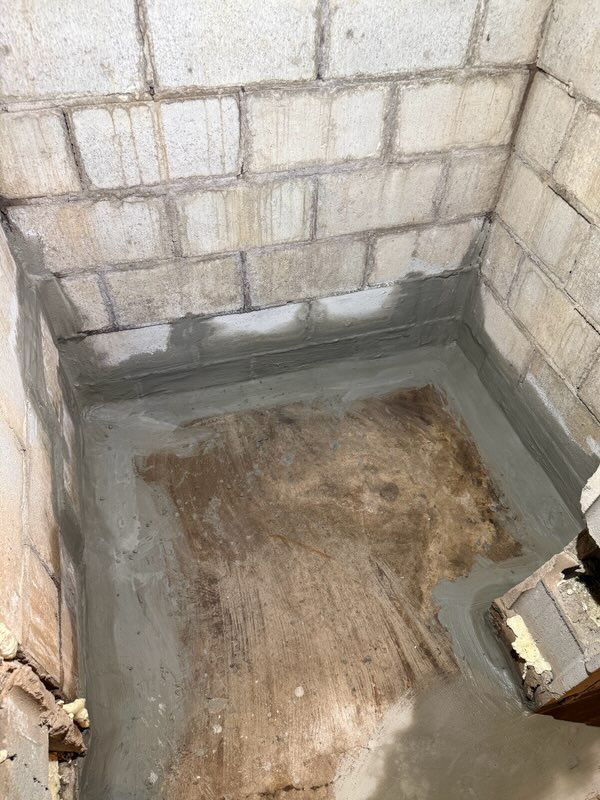

Protection Against Subsurface Moisture Damage
Concrete Waterproofing in North Branch for slabs vulnerable to capillary moisture and vapor transmission
Concrete slabs transmit moisture upward through capillary action and vapor diffusion, and when that moisture reaches the surface it degrades adhesives, causes coatings to delaminate, and creates internal pressure during freeze cycles that cracks the substrate. Wild Coatings LLC. applies moisture barrier coatings and mitigation systems designed specifically to block water intrusion before it compromises flooring systems or damages equipment anchored to the slab. Properties in the North Metro and along the Minnesota-Wisconsin border face persistent groundwater movement and freeze-thaw cycling that make waterproofing essential rather than optional.
Moisture barrier coatings are applied after grinding the concrete surface to remove contaminants and create the profile necessary for bonding. These coatings address both liquid water penetration and water vapor transmission, which are two distinct modes of moisture movement that require different barrier mechanisms to control effectively.
Arrange an on-site moisture assessment to measure vapor emission rates and determine which barrier system your substrate requires.
How Moisture Mitigation Systems Function
Moisture moves through concrete in two ways: liquid water travels through capillaries and cracks, while water vapor diffuses through the pore structure in response to humidity gradients between the soil beneath the slab and the air above it. Barrier coatings bond to the substrate and create an impermeable membrane that stops both types of transmission, which prevents the moisture from reaching applied flooring systems or creating efflorescence on the surface.
Once the waterproofing system cures, you no longer see moisture stains or white mineral deposits on the slab surface, coatings applied over the barrier maintain adhesion regardless of subsurface moisture levels, and interior spaces remain dry even during spring thaw or heavy rain events common across Minnesota. The barrier also prevents freeze-thaw damage by eliminating the water that would otherwise saturate the concrete and expand during winter temperature drops.
Waterproofing is distinct from decorative epoxy coatings and serves as a preparatory layer within a complete flooring system. Wild Coatings LLC. selects barrier formulations based on measured vapor emission rates and the type of topcoat or flooring that will be installed after the waterproofing layer cures.
Answers to Waterproofing Questions
Clients often ask how waterproofing differs from standard sealers and whether it is necessary before installing epoxy or other floor coatings in commercial or residential settings.
What is the difference between waterproofing and sealing concrete?
Sealing reduces surface porosity and prevents staining, while waterproofing creates an impermeable barrier that stops moisture transmission from below the slab, which is necessary when vapor emission rates exceed the tolerance of coatings or adhesives applied above the barrier.
How do you measure whether a slab requires waterproofing before coating?
Calcium chloride tests or relative humidity probes measure the rate of moisture vapor emission from the concrete, and when readings exceed manufacturer specifications for the planned coating system, a moisture barrier is required to prevent delamination or adhesive failure.
When is waterproofing critical for Minnesota concrete floors?
Waterproofing is critical when slabs are installed without vapor retarders beneath them, when groundwater tables are high, or when freeze-thaw cycling drives moisture upward during seasonal transitions, all of which are common conditions in North Branch and the surrounding region.
How long does a concrete waterproofing system last?
Properly applied moisture barriers remain effective for the life of the flooring system installed above them, as they bond chemically or mechanically to the substrate and do not degrade from UV exposure or surface wear once covered by topcoats.
Can waterproofing be applied to basements and below-grade slabs?
Yes, barrier coatings are specifically formulated to handle hydrostatic pressure and constant moisture exposure in below-grade applications, where they prevent water intrusion and protect finished spaces from dampness and mold growth.
Wild Coatings LLC. performs moisture testing and applies barrier systems across a five-state service area, addressing the subsurface conditions that threaten concrete floors in industrial and commercial facilities. Request a vapor emission test to determine whether your slab requires waterproofing before coating installation.