
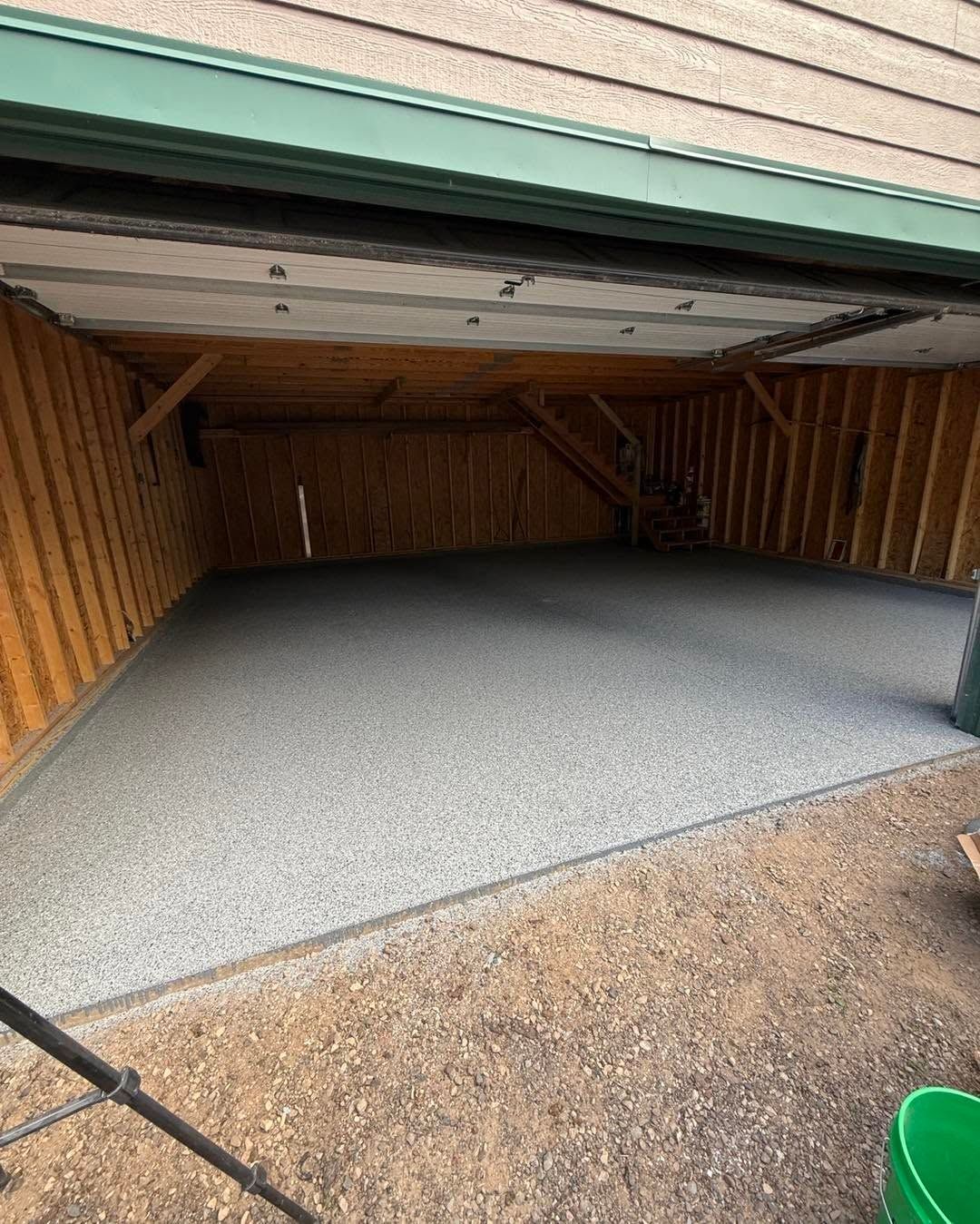

Surfaces Where Function Meets Visual Appeal
Flaked Flooring System in North Branch for commercial spaces and garages requiring decorative finishes with slip resistance
Untreated concrete in Minnesota commercial facilities shows wear patterns within months—tire marks, oil stains, and surface dusting that create maintenance burdens and unappealing customer-facing spaces. Wild Coatings LLC. installs flaked epoxy flooring systems that combine a protective resin base with decorative chip aggregates, creating a textured surface that hides imperfections while delivering the durability Minnesota winters demand. This multi-layer approach addresses both aesthetic requirements and the slip resistance concerns that matter in spaces exposed to snowmelt and tracked-in moisture.
The system starts with an epoxy base coat applied to prepared concrete, followed by a broadcast layer of decorative flakes in selected color combinations. A clear topcoat seals the flakes in place and creates the final wear surface. The flake layer adds texture that improves traction compared to smooth epoxy, which matters during wet conditions or in spaces where employees and customers walk across floors exposed to winter weather residue.
Arrange an on-site consultation to review color options and assess your concrete preparation needs based on current floor condition.
Why Flake Systems Work for High-Traffic Spaces
Decorative flakes are broadcast into wet epoxy at varying densities—light broadcasts create scattered color accents, while full broadcasts cover the entire base coat for uniform texture. The flakes themselves are thin vinyl chips that create a slightly irregular surface, breaking up the smooth plane that becomes slippery when wet. This texture provides mechanical grip without the harsh feel of grit additives, which matters in retail or office environments where foot traffic occurs in dress shoes rather than work boots.
Once the topcoat cures, the floor no longer absorbs spills or stains, and the flake pattern conceals minor imperfections, dirt accumulation, and the small scratches that appear over time in solid-color systems. Cleaning shifts from scrubbing stained concrete to simple mopping, since contaminants sit on the sealed surface rather than penetrating the substrate. The color variation from the flakes also reduces the visual impact of wear patterns in traffic lanes, maintaining a cleaner appearance between maintenance cycles.
Flake size and color selection affects both appearance and performance—larger flakes create bolder patterns but may require additional topcoat thickness to fully encapsulate them, while color blends can be customized to match branding or design schemes in commercial spaces across the North Metro area.
Answers to Common Installation Questions
Flaked systems involve more variables than solid-color installations, from broadcast density to color selection. These questions address the decisions that affect both appearance and long-term performance.
What determines the flake coverage density?
Customer preference and budget drive this choice—partial broadcasts use fewer materials and show more of the base coat color, while full broadcasts create complete coverage where individual flakes touch edge-to-edge, requiring more material but delivering maximum texture and pattern variation.
How do you prevent loose flakes after installation?
The topcoat application follows a scraping step that removes flakes not fully adhered to the base coat, ensuring only bonded chips remain before the clear sealer is applied—skipping this step leaves loose material that eventually separates and creates surface defects.
When is the best time to install flaked flooring in North Branch?
Installation requires controlled temperature and humidity during the multi-day curing process, making late spring through early fall ideal in Minnesota where garage and warehouse temperatures can be regulated more easily than during winter months with unheated spaces.
Why do some flaked floors feel rougher than others?
Topcoat thickness determines surface smoothness—thicker applications encapsulate flakes more completely and reduce texture, while thinner topcoats leave more flake edges exposed for maximum slip resistance in wet environments.
What maintenance does a flaked floor require compared to bare concrete?
Routine dust mopping and occasional damp mopping with pH-neutral cleaner maintains the surface, eliminating the need for periodic sealing or the concrete dust generation that occurs with untreated slabs in high-traffic commercial corridors.
Wild Coatings LLC. completes both small garage projects and large commercial installations across the North Metro region. Contact us to discuss flake color combinations and broadcast density options suited to your traffic patterns and aesthetic preferences.