
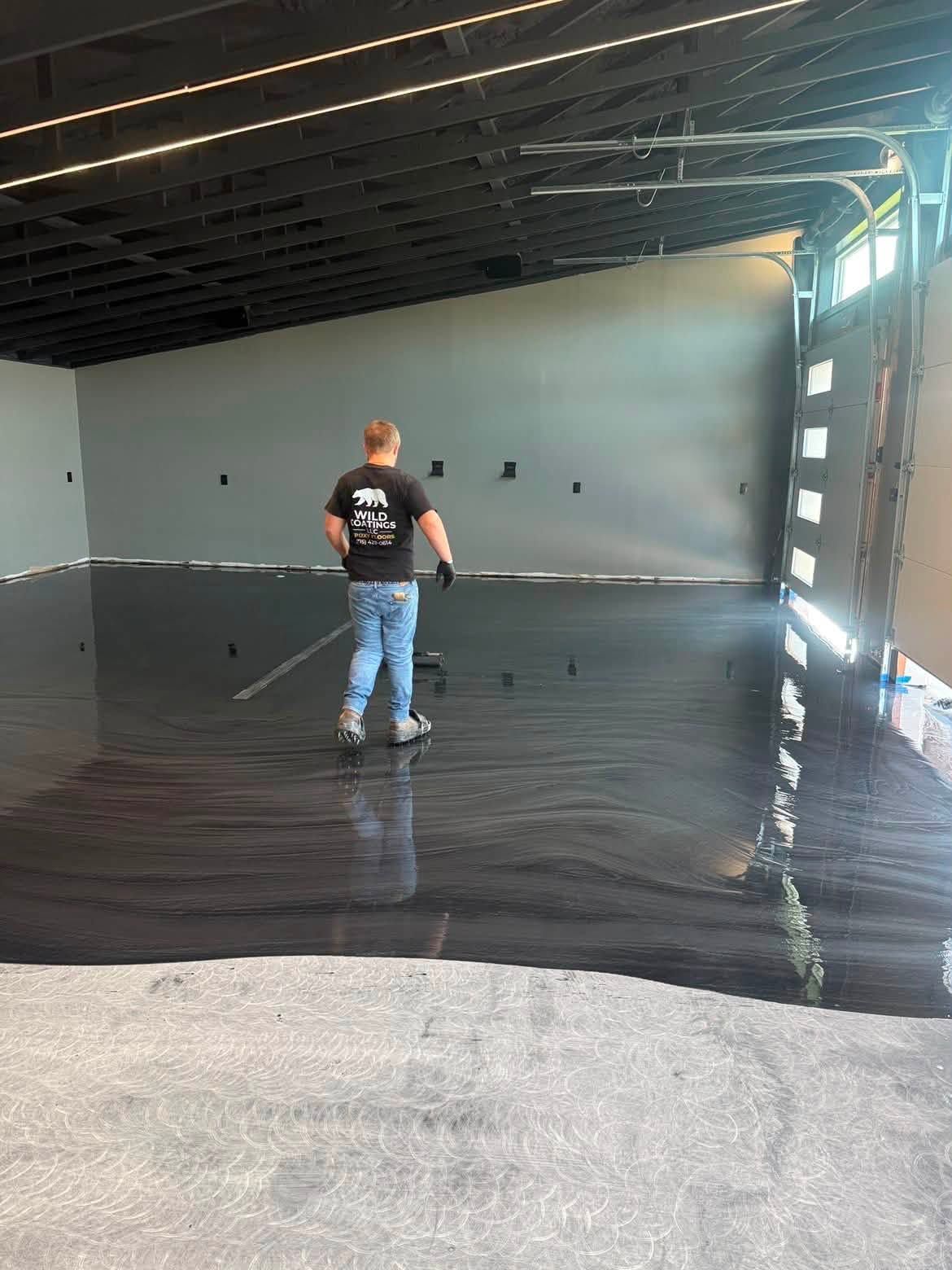

Floors That Handle Real Workshop Use
Flooring Systems in North Branch for garages and commercial spaces exposed to freeze-thaw cycles and heavy equipment traffic
Wild Coatings LLC. installs custom epoxy flooring systems across North Branch and the five-state region, addressing the specific demands Minnesota winters place on concrete surfaces. You need flooring that resists moisture intrusion during freeze-thaw cycles while maintaining slip resistance under wet conditions. These systems bond directly to prepared concrete, creating a protective layer that prevents surface degradation from chemical exposure, impact, and temperature fluctuations common in unheated or partially heated spaces.
The installation process involves surface preparation to remove contaminants and open concrete pores, followed by epoxy application in multiple coats and a protective topcoat that seals the system. This approach addresses the primary failure point in untreated concrete floors: water absorption that leads to spalling and cracking when temperatures drop below freezing. Proper surface prep removes oils, existing coatings, and weak concrete layers that would prevent the epoxy from achieving mechanical bond strength.
Schedule a property evaluation to assess your concrete condition and determine the prep work required for long-term adhesion.
What Proper Flooring Systems Require
The concrete surface must be profiled to a specific roughness standard before epoxy application—smooth concrete prevents the resin from penetrating and locking into the substrate. Diamond grinding or acid etching opens the pore structure, allowing the first coat to penetrate rather than sit on top of the slab. Moisture testing determines whether a vapor barrier primer is necessary, which matters in below-grade spaces or slabs without proper vapor retarders beneath them.
After the system cures, you'll notice the floor no longer absorbs oil stains, water beads on the surface instead of soaking in, and the concrete stops producing dust when vehicles or equipment move across it. The topcoat creates a sealed barrier that prevents de-icing salts and chemicals from penetrating the concrete matrix, which is what causes the surface pitting and flaking common in untreated garage floors after several Minnesota winters.
Slip resistance is built into the topcoat through aggregate additives or texture patterns applied during installation. The system thickness and chemical resistance level varies based on whether the space handles light vehicle traffic, heavy equipment, or industrial processes that expose the floor to solvents and acids.
Questions Property Owners Ask Before Installation
Flooring system selection depends on the exposure conditions your concrete faces and how the space is used. These answers address the factors that determine which system specifications suit your requirements.
How long does the concrete need to cure before epoxy can be applied?
New concrete must cure for at least 28 days and reach a moisture vapor emission rate below the epoxy manufacturer's threshold, typically measured in pounds per 1,000 square feet per 24 hours using calcium chloride testing—this matters in North Branch where high groundwater levels can delay installation timelines.
What happens if the floor is exposed to freeze-thaw cycles before the epoxy fully cures?
The system can delaminate if moisture is trapped beneath the coating during cold snaps, which is why installation timing in Minnesota requires attention to seven-day weather forecasts and workspace temperature control during the curing period.
Why do some epoxy floors turn yellow over time?
UV exposure breaks down certain epoxy resin formulations, causing amber discoloration—aliphatic topcoats resist this degradation in spaces with natural light or overhead doors that remain open during daytime hours.
What preparation is required before the installation crew arrives?
The space must be cleared of vehicles, storage items, and debris, and any existing coatings or sealers need to be disclosed during the estimate phase since they affect the surface prep approach and equipment required.
How does the system handle hot tire pickup in summer months?
Properly formulated epoxy resists tire plasticizer absorption that causes dark tracking patterns, but the concrete must be fully cured and dry during installation or the heat from tires can draw residual moisture through the coating and create bubbles.
Wild Coatings LLC. handles both residential and commercial installations up to a 500-mile radius from North Branch. Request a detailed estimate that includes surface prep requirements specific to your slab condition and the coating system matched to your exposure conditions.